
144 N Frost Dr #1, Saginaw, MI 48638
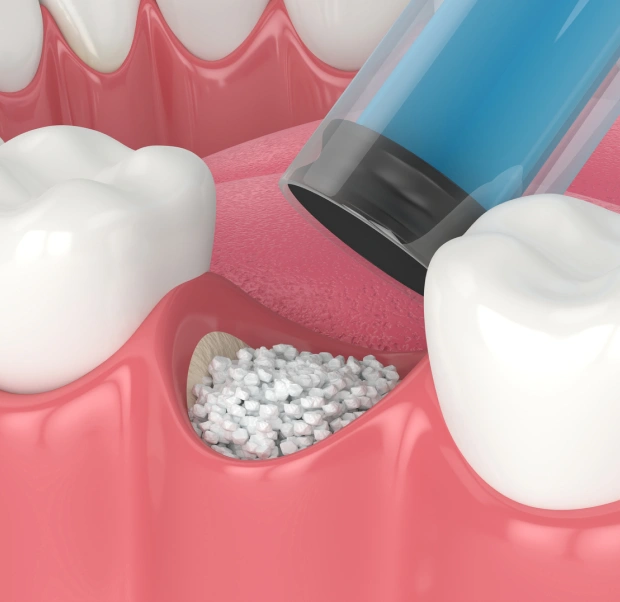
Preparing the Foundation for a Successful Implant
Dental implants rely on a stable, sufficient amount of jawbone to fuse securely and function properly over time. When a tooth has been missing for an extended period, or when gum disease has caused significant bone loss, the jawbone in that area often becomes too thin or too soft to support an implant on its own. Bone grafting addresses this by rebuilding and strengthening the area, creating a solid foundation for successful, long-lasting implant placement.
At Saginaw Family Smiles, our Saginaw team carefully evaluates your jawbone density before recommending bone grafting, ensuring the procedure is genuinely necessary for your specific treatment plan. We walk you through the process clearly, so you understand exactly why this step matters for the long-term success of your implant.
Book a Bone Grafting Consultation
What Is Bone Grafting
Bone grafting is a surgical procedure that adds bone material to an area of the jaw where natural bone has become too thin, soft, or shallow to support a dental implant. The grafting material, which may come from the patient's own body, a donor source, or a synthetic substitute, is placed in the deficient area and gradually integrates with the existing bone over a period of several months.
As the graft matures and fuses with the surrounding jawbone, it creates a stronger, more substantial foundation capable of supporting an implant securely. In many cases, bone grafting is performed as a preparatory step before implant placement, though it can occasionally be done at the same time as the implant itself, depending on the amount of bone loss present.
Why This Step Matters for Long-Term Implant Success
- Creates a stronger, more stable foundation for dental implant placement
- Increases the likelihood of long-term implant success and stability
- Helps restore natural jaw contour that may have changed due to bone loss
- Prevents further bone deterioration in the treated area
- Expands candidacy for implants to patients who may have previously been told they lacked sufficient bone
- Supports better overall function and stability of the final restoration
What to Expect During Your Procedure
Evaluation and Imaging
We assess the extent of bone loss using X-rays or 3D imaging to determine the right grafting approach for your specific situation.
1
Anesthesia
Local anesthesia is administered to ensure the procedure is comfortable, with sedation options available for patients who prefer additional relaxation.
2
Placing the Graft Material
The chosen grafting material is carefully placed into the deficient area of the jawbone.
3
Closing the Site
The gum tissue is closed over the graft, allowing it to heal and begin integrating with the surrounding bone.
4
Healing and Integration
Over the following months, the graft matures and fuses with your natural bone, creating a stronger foundation for future implant placement.
5
Follow-Up Evaluation
Once healing is complete, our Saginaw team evaluates the treated area to confirm it is ready to support a dental implant.
6
Who Needs Bone Grafting?
Bone grafting is typically recommended for patients who:
- Have experienced significant bone loss due to a long-term missing tooth
- Are recovering from advanced gum disease that has affected the jawbone
- Have thin or shallow bone in the area where an implant is planned
- Previously wore a denture for an extended period without implant support
- Are pursuing implant-supported dentures and need adequate bone across multiple implant sites
A thorough evaluation using X-rays or 3D imaging allows our Saginaw team to determine the extent of bone loss and whether grafting is necessary before moving forward with implant placement.
Build the Foundation for a Successful Implant
If bone loss has left you feeling like implants are out of reach, bone grafting could change that. Schedule your consultation with our caring dentist Saginaw, MI patients trust.
Book Appointment